Thursday, March 24, 2011

Artist #15: Paul Robertson


Paul specializes in pixel art animation, and does an amazing job of it I'd say. His medium is that of the digital, creating classic sprites from the 16-32bit era, with stylized figures and wild creations that work to create a feeling of nostalgia for an age passed. His art is fun and entertaining to behold and watch. His style is heavily influenced by eastern style anime, with subject matter mainly focused on figures, with bits pulled from numerous entities to create his creatures.

Moltov Man

The legal battle between Joy Garnett and Susan Meiselas has created a lot of controversy over a single picture of a single man, whose name has been lost as his image has become the icon of rebellion and revolution. The capturing of the raw emotion of anger captured by both the artists provides a perfect image of what the anger and rage felt by the oppressed looks like, and allows others to get a feel for it. The man's action immortalized his image, the icon even being re-printed in Nicaragua for the anniversary of the revolution, and painted on walls to symbolize the same. The symbol of the Moltov Man took a deep root in society, whereas his name has simply fallen from the page.

Artist #14: Richard Serra

Serra has an interesting form of 3D art, involving the twisting of thin, long, tall pieces of metal into organic curving lines, or simple geometric forms. He has also used molten lead, in a more Jackson Polluck style, as well as rubber and fiberglass, all mediums which are rarely, if ever, used. Generally he seems to place his work in with sheet metal in a enclosed or very wide space where people are forced to walk by, being dwarfed by the massive pieces of metal.


His choice of metal and the way he uses it sports a heavy influence from the earlier mentioned Polluck, as well as many of the other abstract artists from the time. His work gives the same feeling of "energy and raw physicality", as his Art21 biography puts it. Some of his material, like the lead, also have a time based quality, changing as years pass to settle and take on a different sheen that they originally held.

Artist #13: Pendleton Finn Ward

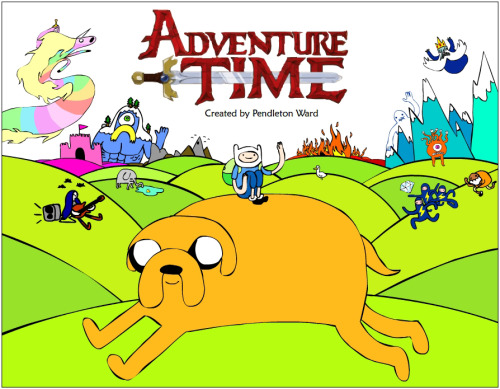
A newcomer to the land of animation, Pendleton Ward always succeeds in bringing a smile to my face with his zany ideas and colorful worlds. None more so than Adventure Time, which has lured me back into cartoons with colorful, expansive lands to wander, and dark, deep dungeons abound. It's like my childhood wrapped in a colorful, package of pure amazing.


The art is simple, colors are solid, with shading only present in situations of extreme light or dark. It's a style that reminds me of my drawings in grade school, but done with such eloquence you can't help but smile. Pendleton expresses his knowledge of his audience through this show, hitting exactly where and how it should.

Artist #12: Hayao Miyazaki

The first movie I can recall seeing, in full detail, is My Neighbor Totoro by Hayao Miyazaki. It was bright, fantastical, and told a wonderful story. All of the movies this man has produced have had a profound effect on me and my art. No matter how dark the stories seemed to get, they were always light-hearted, and filled with fun adventures. They way he can capture emotion in his characters and the magnificent landscapes he creates always leave me slack-jawed and longing for more.

Calm, serene settings and warm colors help to amplify the feelings of happiness in his work, along with his ability to capture facial expressions perfectly serve to amplify the warm-hearted tale he tells. Even his blues and other cool colors are lined with light and smooth, wavy edges to keep the calm atmosphere. When he does bring forward a darker mood, the darks accompany, blacks becoming deeper and more expansive before being gently pushed back by light as a scene plays through. His work is always a treat to behold, and his animations and art serve to drive me forward and remind me why I love the world of art so much.

Artist #11: Jeff Koons

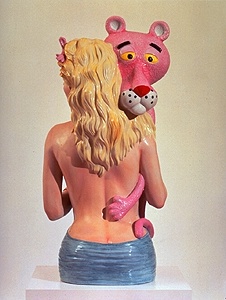
I have trouble seeing Jeff Koons as an artist. I certainly acknowledge his pieces as art, but I don't feel they're really his per se, since he doesn't actually work the material to make what he does. To me art is about having the knowledge to make something with your own hands, and being practiced enough to do it better than the vast majority. If someone thinks of an idea for a statue, and asks a sculptor to craft it, it may belong to the buyer, but it is still the artist's work. To me, Jeff owns the art, but the art is not his own. Perhaps this is part of what he is trying to do, but I simply don't think he is deserving of having his name placed as a creator of the work.

Artist #10: Clive Barker

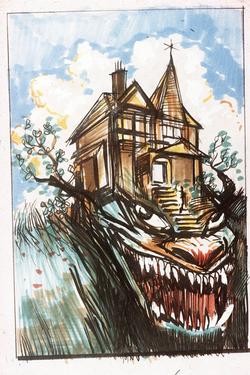
While writing for a long, long while, Clive Barker discovered painting in his mid/late 30's. I was unaware that he had come into the art world until last night after watching an interview with him at his studio. In it, he discussed the reason he loved art, which went along extremely well with my own feelings about the subject. He makes art because it's a way for him to clear his mind and get all his ideas laid out for others to see and contemplate. He tries to show what he has learned about the world through his art, and hopes to offer a glimpse into dark and fear from the safety of a well lit room. His wild lines and frenzied paint offer a high level of energy with a great contrast between colors, creating wonderful works of art for ones eyes to simply soak up and admire.